


Christianity Vs. Atheism: The Debate That Never Happened

Late Victorian London, England — circa 1887–1891
History sometimes records great debates that shaped nations. And sometimes, history remembers the debates that never happened.
This is one of those stories.
Two Real Men. Two Opposing Worldviews.
In late 19th-century London, two prominent public figures stood on opposite sides of one of the most important questions in human history.
Charles Bradlaugh (1833–1891) was Britain’s best-known atheist and secularist. He was the first declared atheist elected to Parliament in 1880. A powerful speaker and outspoken advocate of secularism, Bradlaugh sought to remove religion from public life and government.
Opposing him was Hugh Price Hughes (1847–1902), a passionate Wesleyan Methodist preacher and social reformer. Hughes led the West London Methodist Mission and ministered among the poor, the addicted, the forgotten, and the broken in lower London.
One championed atheism and secularism. The other proclaimed Christ and the transforming power of the Gospel.
And a debate was brewing.
The Challenge
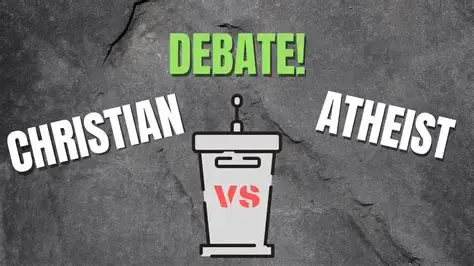
Bradlaugh reportedly challenged Hughes to a public debate on the validity of Christianity versus atheism.
Was belief in God reasonable? Did Christianity truly improve lives? Were its claims credible?
Hughes agreed — but under one condition.
Each man would bring “evidence.”
Not books.
Not philosophy.
Not abstract arguments.
People.
Hughes proposed that each side bring individuals whose lives had been demonstrably improved by their beliefs.
For Hughes: people transformed by faith in Jesus Christ. For Bradlaugh: people transformed by atheism and secularism.

It was commonly reported that Hughes suggested each bring 100 witnesses.
Hughes claimed he could easily produce 100 men and women whose lives had been radically changed by Christianity — former alcoholics, criminals, prostitutes, addicts, and social outcasts who had found new purpose, dignity, and moral direction through faith in Christ.
Bradlaugh, however, did not accept the terms.
According to reports of the time, Hughes progressively lowered the number — from 100 witnesses down to just one person who would publicly testify that atheism had transformed their life for the better.
Ultimately, Bradlaugh withdrew the debate request.
And so, the debate never happened.
Why This Story Endures
Whether told in sermons, classrooms, or conversations, this story has endured for over a century because it shifts the focus from theory to testimony.
Arguments matter.
Reason matters.
But transformed lives matter too.
Christianity has always made a bold claim: that the Gospel of Jesus Christ changes people from the inside out.

Throughout history, countless individuals have testified that faith in Christ rescued them from addiction, despair, violence, bitterness, hopelessness, and self-destruction.
Faith gave them:
A new identity
A moral compass
Forgiveness
Hope beyond the grave
A relationship with a living Savior
The power of the Gospel is not merely intellectual — it is transformational.
The Question Beneath the Question
The Bradlaugh–Hughes story forces a deeper question:
What worldview produces real, lasting change?
Atheism asserts that there is no God, no divine accountability, no eternal destiny beyond this life. Human beings must define their own meaning.
Christianity declares that we were created by God, accountable to Him, loved by Him, and redeemable through Jesus Christ.
One worldview places ultimate hope in human effort. The other places ultimate hope in divine grace.
The debate that never happened quietly suggested something powerful: Hughes believed Christianity’s evidence could walk onto a stage and speak.
And that confidence itself is telling.
Faith Requires a Choice
Human nature often resists spiritual truth. We prefer what we can see, measure, and control.
Yet the most important realities in life — love, hope, justice, purpose — are not things we can hold in our hands.
The Gospel message calls for faith — trust in truths that are spiritual in nature but lived out in practical ways.
Millions across centuries have testified that faith in Jesus of Nazareth transformed:
Their character
Their relationships
Their habits
Their priorities
Their eternal perspective
Transformation is not theoretical. It is personal.
And many believers today — including myself — would gladly stand as living witnesses to that change.
A Matter of Free Will
God does not force belief.
We are given free will — the freedom to accept or reject Him.
That freedom carries weight.

If Christianity is true, then our choices echo beyond this life. If atheism is true, then this life is all there is.
That is not a trivial decision.
The Bradlaugh–Hughes story invites reflection:
What belief system produces hope?
What produces moral accountability?
What produces transformed lives?
What produces eternal security?
Each person must decide.
Think Long and Hard
If you are a committed atheist, this story may not persuade you.
But if you are searching — if you are weighing what to believe — consider not only philosophical arguments but also real-world outcomes.
Has faith improved lives?
Has the message of Jesus lifted the broken?
Has the Bible shaped civilizations for good?
History strongly suggests yes.
And countless individuals would testify the same.
If you put your hope in atheism and it proves wrong, the consequences could be eternal.
If you place your hope in Christ and He is who He claimed to be, the reward is life — both now and forever.
That is a decision worth careful thought.
The Debate That Still Continues
The public debate between Charles Bradlaugh and Hugh Price Hughes never happened.
But the larger debate continues in every generation — and in every human heart.
What do you believe?
What is your hope anchored to?
If you desire a truly blessed life — in this world and the next — consider the claims of Christ seriously. Explore them. Examine them. Pray about them.
The Gospel invites investigation.
And it promises transformation.
Thank you for taking the time to read this story.
If it challenged you or encouraged you, please consider leaving a comment and rating in the Comments Box below at the bottom of this page and sharing it with others.
As always, I wish and pray:
"A Blessed Life 4 U!"


Always appreciate your ability and knowledge when breaking down what is written. Thank you